Commercial Roof Coatings are often discussed in broad terms: they can restore an aging roof, create a continuous protective surface, and—in the case of reflective products—change how the roof interacts with solar energy. But those descriptions don’t tell a property owner whether a specific roof is a good candidate or whether the finished installation meets the intended specification.
For that, you need data. Existing moisture conditions, roof area, adhesion, drainage, coating thickness, coverage rate, solar reflectance, thermal emittance, and application conditions can all provide useful information. The goal isn’t to collect numbers for their own sake. It’s to use measurable conditions to make better decisions before, during, and after a coating project.
A coating project should begin with the existing roof. Product performance data cannot compensate for an unsuitable substrate, unresolved moisture, failing details, or inadequate preparation.
The Numbers That Determine Whether a Roof Can Be Coated
Before comparing coating products, establish a baseline for the roof itself. Measure the roof area, document penetrations and equipment, inspect drainage, identify existing damage, and evaluate whether the substrate is compatible with the proposed system. Where moisture within the assembly is suspected, additional investigation may be necessary.
Adhesion is another important variable. Coating manufacturers may require substrate-specific preparation, primers, adhesion testing, or other procedures. The correct acceptance criteria should come from the specified system rather than from a universal rule applied to every roof.
| Baseline Metric | What It Measures | Why It Matters |
|---|---|---|
| Roof Area | Surface area to be restored | Supports material and labor planning |
| Moisture Condition | Evidence of moisture-related concerns within accessible or tested areas | Can affect restoration eligibility and required corrective work |
| Adhesion | How the proposed system interacts with the prepared substrate | Helps confirm preparation, primer, and compatibility requirements |
| Drainage | How water moves toward drains and scuppers | Identifies areas requiring attention before coating |
| Existing Damage | Defects in membrane, seams, flashing, and penetrations | Defines preparation and repair scope |
5 baseline categories deserve documentation before product selection: area, moisture condition, adhesion/compatibility, drainage, and existing damage.
1 key decision: determine whether the existing roof is a suitable coating substrate before calculating expected material quantities.
Coating Chemistry Changes the Performance Profile
Once the roof qualifies for restoration, product selection becomes more meaningful. Acrylic, silicone, and polyurethane coatings are common categories, but they don’t behave identically. Chemistry influences application requirements, weathering characteristics, resistance to rooftop conditions, and compatibility with specific substrates.
Silicone systems are frequently considered where resistance to prolonged water exposure is an important specification concern. Acrylic coatings are widely used as reflective roof coatings but have manufacturer-specific requirements regarding substrate and drainage conditions. Polyurethane products can offer strong mechanical and abrasion characteristics, making them relevant where toughness is an important project consideration.
Those are starting points—not substitutes for technical data sheets. A particular formulation can differ significantly from another product in the same general chemistry family.
| Coating Family | Common Strength | Data to Verify |
|---|---|---|
| Silicone | Water and UV exposure characteristics | Approved substrates, primer requirements, thickness, coverage, cure conditions |
| Acrylic | Reflective coating applications | Drainage requirements, weather limitations, reflectance, coverage, thickness |
| Polyurethane | Mechanical and abrasion resistance characteristics | System build, compatibility, UV/topcoat requirements, thickness, cure conditions |
There is no single coating chemistry that wins every commercial roofing application. The correct comparison is between the documented roof conditions and the tested requirements and properties of the proposed coating system.
Application Data Matters as Much as Product Selection
Choosing the right product is only half the technical equation. The coating still has to be installed at the required rate and under acceptable environmental conditions. That makes application quality control one of the most important data-driven parts of the project.
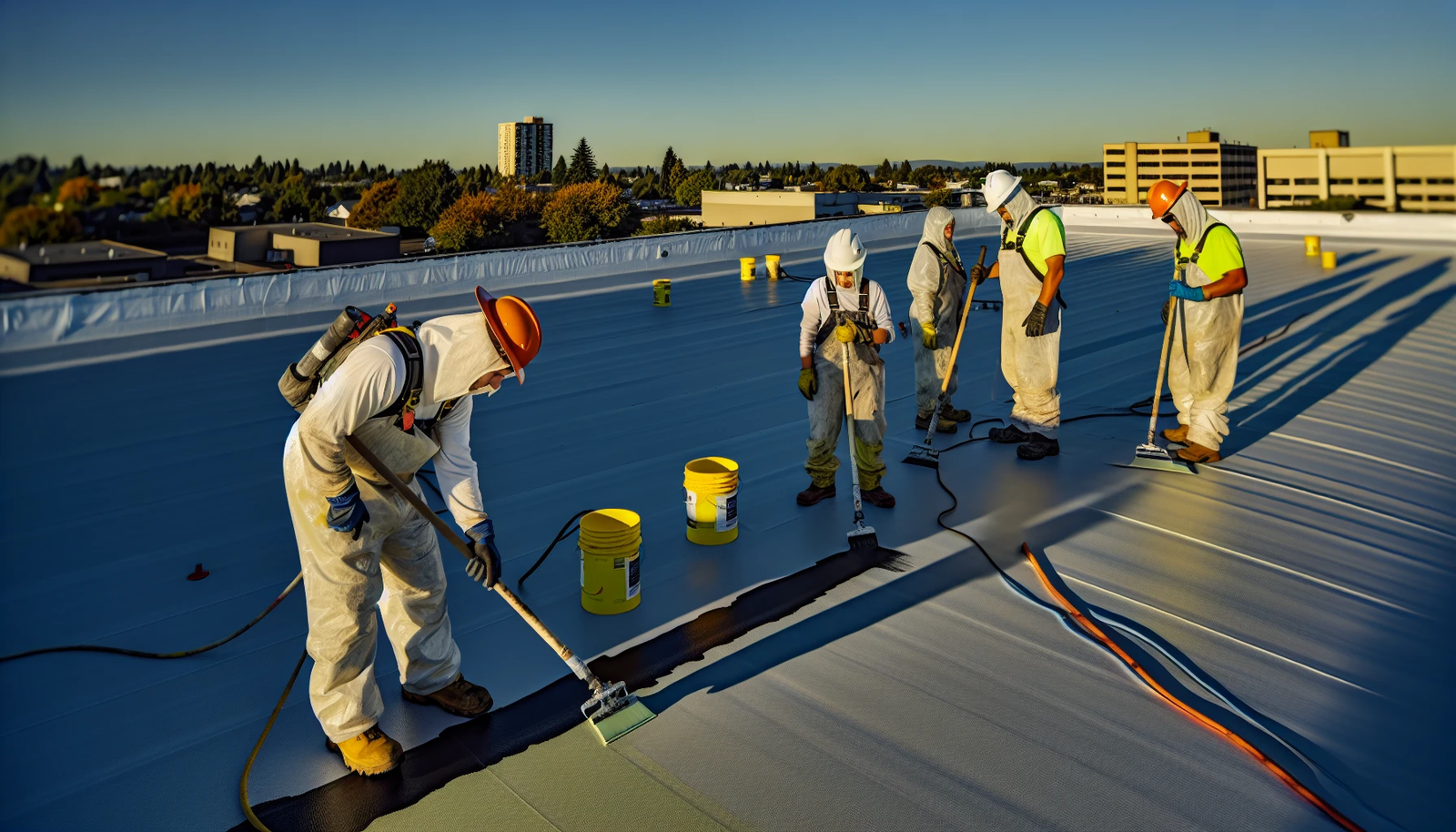
A professional Roof Coating Company should be able to connect the manufacturer’s specification to measurable field conditions. Depending on the system, that can include surface preparation, ambient and substrate temperature, humidity, wet film thickness, dry film thickness, coverage rate, recoat windows, and curing requirements.
Consider a simple material-planning example. If a manufacturer specifies a theoretical coverage rate of 100 square feet per gallon for a particular application step, a 20,000-square-foot coating area would have a theoretical base requirement of:
20,000 sq. ft. ÷ 100 sq. ft./gal. = 200 gallons
That is an illustration, not a universal coating rate. Actual requirements must follow the selected product’s technical data and may be affected by substrate texture, specified system build, details, repairs, waste, and other project conditions.
Coverage rate and film thickness are related quality-control measurements. Simply confirming that coating was applied does not establish that the specified system thickness was achieved.
Reflectivity, Heat, and Energy Performance
Reflective roof coatings are frequently marketed around energy performance, but this is where precise terminology matters. Two commonly reported properties are solar reflectance and thermal emittance. Both are commonly expressed on a scale from 0 to 1, and each describes a different part of the roof’s thermal behavior.
Solar reflectance indicates the fraction of incident solar energy reflected by a surface. A value of 0.80, for example, represents 80% reflectance under the applicable test conditions. Thermal emittance describes a surface’s ability to release absorbed heat through thermal radiation. These values can be useful when comparing tested products, particularly when they come from recognized product ratings or manufacturer technical documentation.
However, neither value translates directly into a universal percentage reduction in building energy consumption. Actual energy performance also depends on climate, roof insulation, HVAC efficiency, building use, operating schedules, roof area, existing roof properties, and other variables.
| Performance Metric | Typical Reporting Format | What It Helps Evaluate | What It Does NOT Prove Alone |
|---|---|---|---|
| Solar Reflectance | 0–1 | Fraction of solar energy reflected | Exact building energy savings |
| Thermal Emittance | 0–1 | Ability to emit absorbed thermal energy | Guaranteed indoor temperature reduction |
| Roof Surface Temperature | °F or °C | Conditions at the roof surface at a specific time | Whole-building annual energy performance |
| Energy Consumption | kWh, therms, or other utility units | Actual building energy use | Roof-only impact without controlling other variables |
0–1: Common scale used for solar reflectance and thermal emittance.
0.80 reflectance: Means 80% of incident solar energy is reflected under the applicable measurement conditions.
0 guaranteed energy-savings percentages: Reflectance alone cannot establish a universal reduction in utility consumption.
For owners interested in energy performance, the stronger approach is to establish a baseline. Historical utility consumption, HVAC operating patterns, insulation conditions, and other relevant variables can provide context for post-project comparisons. Even then, weather and operational changes should be considered before attributing differences entirely to the roof coating.
What Should Be Measured After Installation?
A data-driven coating project should end with more information than it started with. Instead of simply recording that the roof was “coated,” project documentation should establish what product was used, how much material was applied, what preparation and repairs were completed, and whether relevant quality-control requirements were documented.
Wet film thickness can provide field feedback during application for systems where that measurement is applicable. Dry film thickness represents the cured coating thickness and should align with the specified system requirements and approved measurement procedures. Material quantities can also be compared against roof area and specified coverage rates as another quality-control check.
| Installation Metric | When It Matters | Reference Point |
|---|---|---|
| Wet Film Thickness | During applicable coating installation | Manufacturer/system specification |
| Dry Film Thickness | After curing where specified and measurable | Specified finished system requirements |
| Material Quantity | During project reconciliation | Roof area, specified coverage, system build |
| Ambient Conditions | During application and curing | Product application limits |
| Completed Repairs | Before and during coating work | Approved project scope and field conditions |
Material quantity provides a useful cross-check, but it does not replace direct quality-control procedures. Roof geometry, substrate texture, detail work, waste, and system configuration can all affect actual consumption.
Post-installation documentation should also identify areas that deserve attention during future inspections. Drains, scuppers, penetrations, equipment curbs, perimeter flashing, repaired sections, and high-traffic areas can be mapped or photographed to create a baseline for comparison.
Using Data to Build a Better Roof Coating Strategy
The strongest coating decision isn’t based on one impressive specification. It comes from connecting multiple sets of information: existing roof condition, product performance data, application requirements, installation measurements, and long-term inspection records.
Before installation, determine whether the roof is actually suitable for restoration. During installation, document environmental conditions, material use, preparation, repairs, and specified quality-control measurements. After installation, preserve that information and compare future inspections against the established baseline.
5 pre-installation data points: roof area, moisture condition, substrate compatibility, drainage, existing damage.
3 major coating families discussed: silicone, acrylic, polyurethane.
2 key reflective properties: solar reflectance and thermal emittance.
4+ installation controls: film thickness, coverage, environmental conditions, and documented preparation.
1 governing principle: manufacturer specifications and verified field conditions should guide the project—not assumptions based on coating type alone.
This approach also makes future maintenance more useful. Instead of saying that a roof “looks different” several years later, an owner can compare documented conditions, repair locations, drainage observations, coating condition, and other measurable changes against the original project record.
Commercial roof coatings can be valuable restoration tools, but their performance cannot be understood through marketing terminology alone. The more measurable the project becomes, the easier it is to evaluate whether the roof is an appropriate candidate, whether the installation follows the specified system, and how conditions change over time.
For commercial property owners, that’s the real advantage of a data-driven approach: fewer assumptions, better documentation, and roofing decisions grounded in evidence.